
One-Page Checkout vs Traditional WooCommerce Checkout: Which Converts Better?
5/19/20263 min read
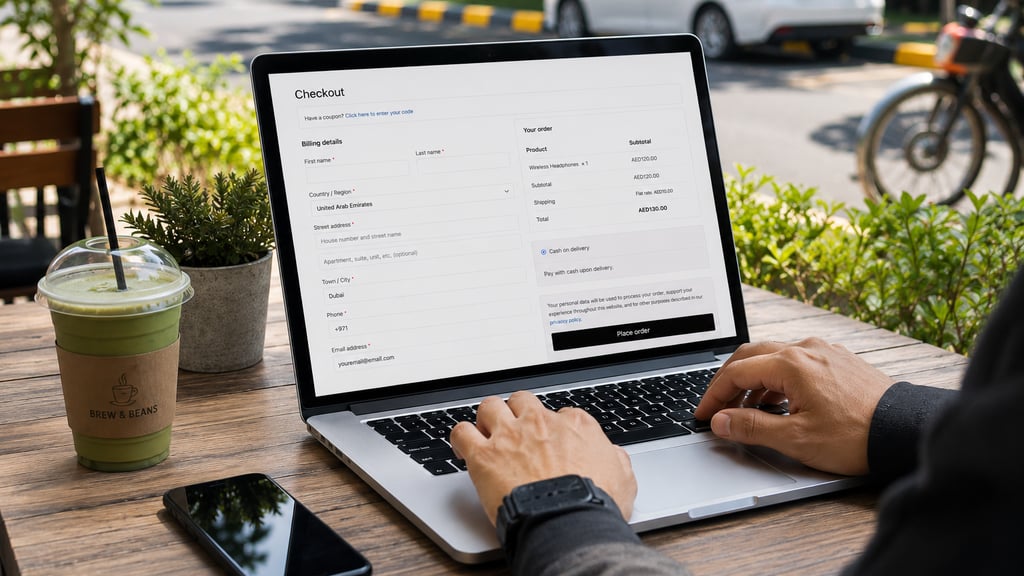

For many WooCommerce businesses, attracting visitors to the website is only half the battle.
The real challenge begins when customers reach checkout.
A customer may browse products, add items to the cart, and show strong purchase intent — but a slow or complicated checkout experience can still prevent the order from being completed.
As eCommerce competition continues growing across MENA, businesses are increasingly looking at checkout optimization as a way to improve conversions and customer experience.
One of the biggest discussions in modern WooCommerce design is the difference between traditional multi-step checkout and one-page checkout experiences.
So which approach actually works better?
The Problem With Traditional WooCommerce Checkout
Traditional WooCommerce checkout systems were originally designed around a longer, step-based purchasing flow.
In many stores, customers are required to:
Visit the cart page
Proceed to checkout
Complete multiple sections
Navigate between pages
Review order details
Submit payment or COD information
While this process may seem standard, it can create unnecessary friction — especially for mobile users.
Every additional step introduces another opportunity for the customer to leave before completing the order.
Checkout Friction Directly Impacts Conversion Rates
Research consistently shows that checkout friction is one of the leading causes of cart abandonment.
Global cart abandonment rates average around 70%, with complicated checkout flows, forced account creation, and long forms ranking among the top reasons customers leave before completing purchases.
Many customers today expect:
faster ordering
fewer clicks
minimal distractions
mobile-friendly checkout experiences
When checkout becomes too slow or overwhelming, customers often abandon the process entirely.
Why One-Page Checkout Is Growing in Popularity
One-page checkout simplifies the purchasing process by allowing customers to complete the entire order journey from a single page.
Instead of moving through multiple screens, customers can:
Review products
Enter shipping details
Select payment methods
Place orders
All within one streamlined experience.
This approach reduces:
Unnecessary navigation
Extra loading times
Interruptions during checkout
Cognitive overload for shoppers
The result is often a smoother and faster customer experience.
Mobile Commerce Is Reshaping eCommerce in MENA
The importance of checkout optimization becomes even greater in mobile-first markets.
Recent market research shows smartphones now account for a significant share of eCommerce transactions across MENA, including nearly 79% of online transactions in the UAE.
This shift means WooCommerce stores can no longer rely on desktop-focused checkout experiences.
Mobile shoppers expect:
fast-loading pages
simple forms
fewer steps
quick order completion
Long or complicated checkout flows can feel frustrating on smaller screens, leading many customers to leave before placing an order.
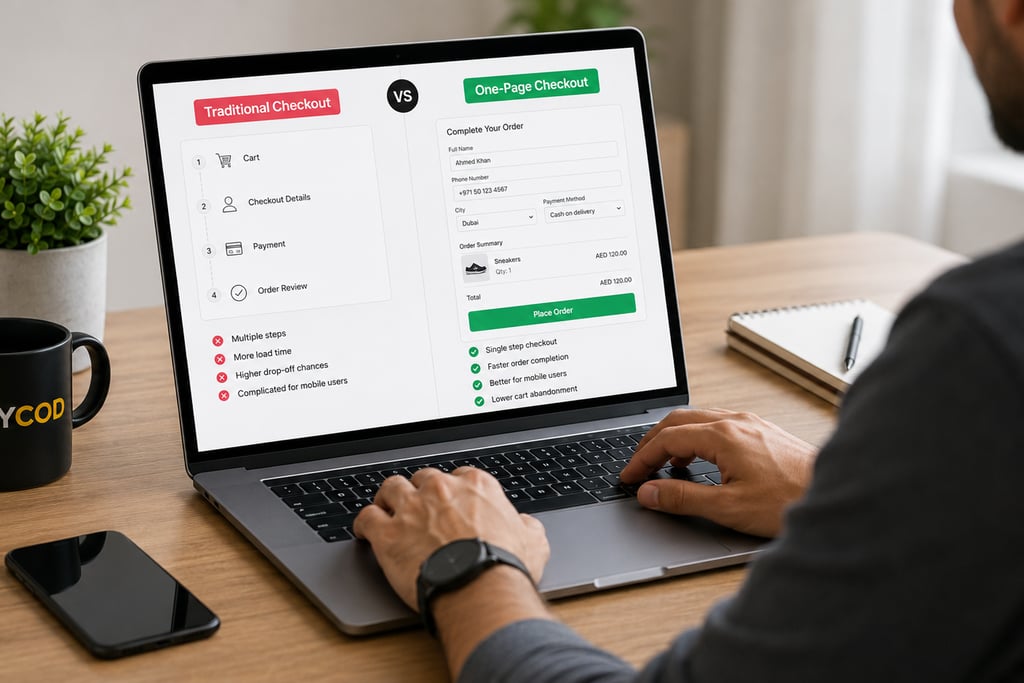
Traditional Checkout vs One-Page Checkout
Traditional WooCommerce Checkout
Common Characteristics
Multiple checkout pages
Extra loading times
Separate cart and checkout stages
More form sections
Additional navigation steps
Common Challenges
More opportunities for drop-off
Slower mobile experience
Higher checkout friction
Increased customer distractions
One-Page Checkout
Common Characteristics
Single-page ordering flow
Faster checkout process
Simplified customer journey
Reduced navigation
Cleaner mobile experience
Potential Benefits
Fewer interruptions during checkout
Faster order completion
Better suited for mobile-first shoppers
Simpler ordering experience for COD customers
Why COD Businesses Benefit From Faster Checkout
Cash on Delivery customers often behave differently from traditional online payment users.
In many COD markets, customers prioritize:
Speed
Simplicity
Convenience
Trust
They are often less willing to complete long checkout processes or navigate multiple pages before placing an order.
This is particularly important in MENA eCommerce markets where:
Mobile usage is high
COD remains widely used
Customer attention spans are shorter during checkout
Simplified ordering experiences can help WooCommerce stores reduce friction and support faster order completion.
Simpler Checkout Experiences Create Better Customer Journeys
Modern eCommerce businesses are increasingly focusing on reducing unnecessary complexity during checkout.
The goal is not simply to make checkout “look cleaner.”
The goal is to:
Help customers complete orders faster
Reduce friction during purchasing
Improve mobile usability
Create smoother buying experiences
Even small improvements in checkout simplicity can have a meaningful impact on customer behavior.
Building Smarter WooCommerce Checkout Experiences
As WooCommerce stores continue competing in fast-growing eCommerce markets, checkout experience is becoming a key part of conversion optimization.
Solutions like ITYCOD help businesses create more streamlined, mobile-friendly, and conversion-focused checkout experiences designed for modern WooCommerce and COD workflows.
By simplifying the ordering process, businesses can focus on creating a smoother experience from product page to completed order.